
From What Sustainable Giving Is – To What It Could Be
In 2000, 67% of households in the U.S. gave a gift to charity.
By 2020, that figure had fallen to 47%, and there is reason to believe it has slid further since then.
The generosity crisis is real.
And it’s not okay.
I still remember my conversation with Steve Froelich, then Chief Development Officer at St. Jude Children’s Research Hospital, on the critical importance of sustainable giving.
I was deep in the final revisions of The Rise of Sustainable Giving, and Steve got it immediately. Not because of something I said, but because he’d been living it for more than a decade at St. Jude. Recurring giving is a bedrock of their fundraising program, and he was already not just a believer but a practitioner.
Fast forward to this week in Chicago.
Earlier this year, Steve joined the team at GoFundMe as Chief Customer Growth Officer, his first on the provider side of philanthropy after more than 27 years fundraising for causes.
Steve opened the event by sharing the sobering stats above. In the year 2000, fully two-thirds of American households gave to charity. And just two decades later, that number has slipped to less than half.
This week about 600 leaders gathered at the Collaborative conference in Chicago, hosted by the team at GoFundMe.
One of the biggest threads of the week was how to address this crisis in participation in philanthropy. At the same time, GoFundMe has seen a surge in generosity among Americans, just not in the traditional sense of gifts to philanthropy. Over 10 million fundraisers have been started on the platform, which sees 100 million+ visitors every single month.
One other bright spot?
Recurring giving.
How Sustainable Giving is Key to Addressing the Generosity Crisis
Over the past dozen years, individual giving in the United States has grown at an average rate of 3.7% – not quite keeping pace with the market, which has grown at a pace 4.8%.
But amidst this reality, there has been a shining bright spot – subscriptions. Over the same period, subscription-oriented companies have seen an average annual growth rate of 16.5%.
That’s growth of more than FOUR TIMES faster over more than 12 years. That’s a bright spot worth paying attention to!

Above: Growth in giving from individuals in the United States (3.7% CAGR) has lagged slightly behind the general market (4.8% CAGR), while subscriptions have grown explosively over the same window of time (16.5% CAGR), more than four times faster than charitable giving. Charities that are sustainer-first are seeing similar growth.
The System We’ve Inherited
In the United States, we live in a single-gift-centric fundraising paradigm.
Single-gift fundraising is the air we breathe. The water we swim in – so familiar that we rarely stop to question it.
Success is measured by how many donors we acquire and how much revenue we raise – usually within narrow windows of time.
We chase the calendar.
We manufacture moments.
We learn to live with volatility as if it were normal.
And then we do it all again.
Within this system, recurring giving is rarely given the consideration, emphasis, and depth of attention it deserves.
This is the reality that The Center for Sustainable Giving seeks to change. And not just in the United States, but we hope to make a positive impact on sustainable generosity around the world.
But the truth is the United States is behind. We have one of the most generous and most philanthropic cultures in the world, and yet we lag in this critical area of sustainable generosity.
The Future of Sustainable Funding
This week in Chicago was a glimpse of a more sustainable future for charities, in the United States and beyond.
I hosted a panel discussion on the future of recurring giving with leaders of four dynamite organizations:
Color of Change
Doctors Without Borders
Ford’s Theatre Society
Tunnel to Towers
One thing struck me about our conversation, and it’s a phrase that has come to mind again and again in the past few months:
Belief precedes growth.
We talked about the importance of organizational buy-in and culture, messaging and strategy, measuring success and making the case with data, and we looked at bright spots and surprises. But all of that starts with belief. Belief that recurring giving is possible. Sustainability is for every charity. And that it can work for you and your organization.
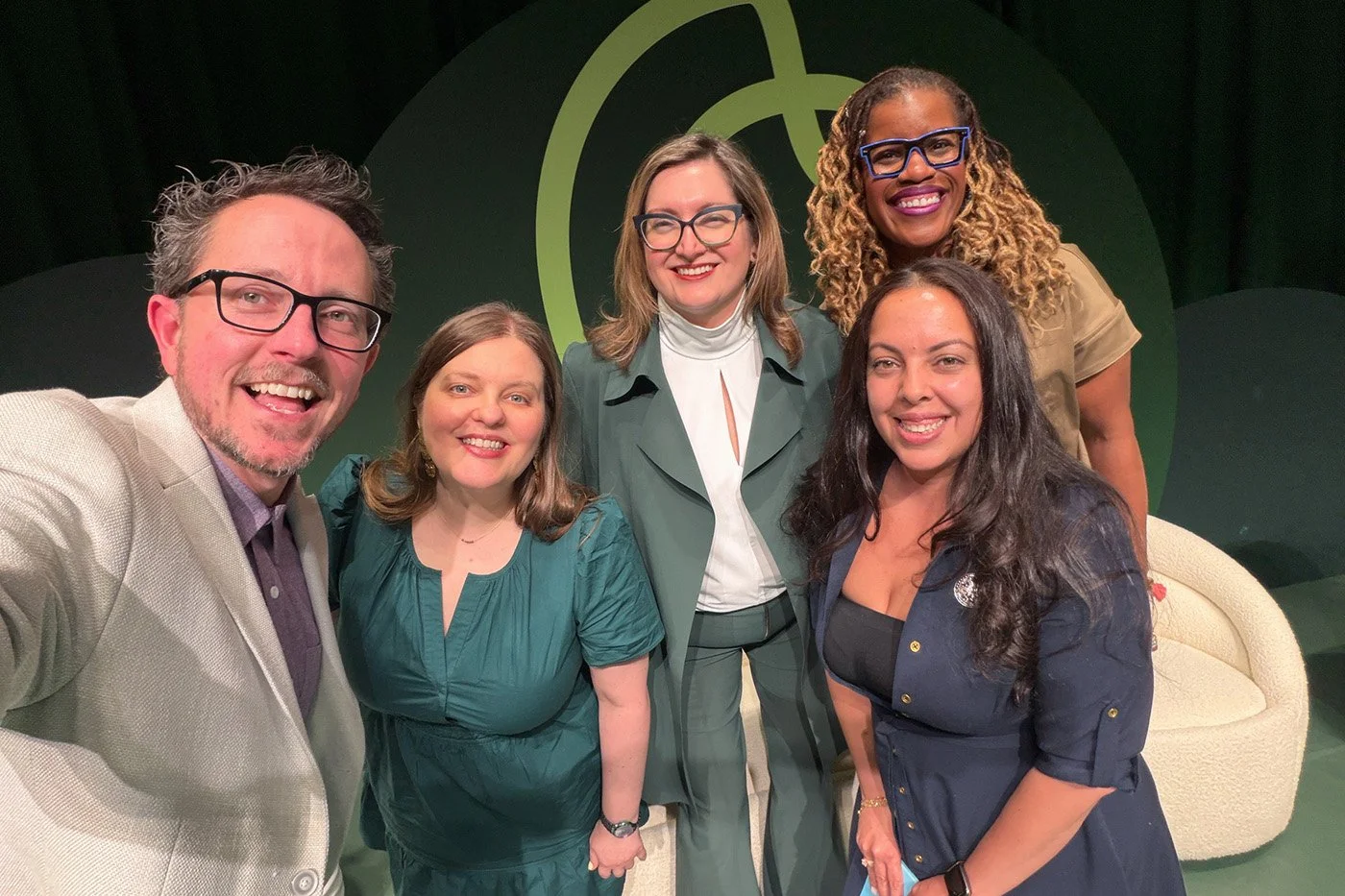
Above: Sarah Autry of Doctors Without Borders, Sarah Wilber of Ford’s Theatre Society, Sherry Morcos of Tunnel to Towers, and Kishshana Palmer of Color to Change, after our dynamic conversation about growing recurring giving and inspiring generosity.
Every leader on the panel is at a different stage, and each has distinct natural strength. But there was one area we universally agreed on – recurring giving is more accessible to more charities than at any other time, and the future of sustainable giving is bright. 💜
Until next week… Surf’s Up! 🌊
- Dave
P.S. It was energizing this week to spend time with customers and the folks building GoFundMe Pro for charities behind the scenes. Every session I attended this week highlighted to me how important recurring giving is to their team.
GoFundMe Pro is invested heavily in equipping charities to grow sustainable giving, which is why I was proud to announced this week that GoFundMe Pro is now officially a Sustainable Giving Certified Partner. Our Sustainable Giving Partner Certification is an objective, independently verified certification that evaluates the readiness of technology providers, agencies, or consultants to support modern recurring giving programs.