

The Wave Report
Insights, research, and frameworks to help you grow sustainable giving.

Your Next Legacy Donor is Giving to You Monthly
I still remember the day I realized that everything I thought I knew about legacy giving was wrong.

Imago in Potentia – The Next 100 Years of Generosity 💜
Four years ago, I founded what has become The Center for Sustainable Giving – built on a simple desire: to inspire generosity.

Mistakes Every Leader Needs to AVOID
Charity leaders are leaving real money on the table without realizing it.
Over the past twenty years, I've worked with, spoken to, or advised thousands of nonprofit leaders. One thing I've learned is that every area of fundraising is its own deep rabbit hole. Major gifts, grants and foundations, corporate and church relations, single-gift and recurring giving – each is a sophisticated discipline that rewards deep expertise over time.
I've spent thousands of those hours specifically on recurring giving.
So today, let's walk through ten of the most common mistakes I see leaders make when building and growing their recurring giving programs – and how to avoid them.

Your Best Recurring Offer Isn't an Object
When it comes to designing the best offer for recurring giving, one of the most important insights I've learned is this: focus on outcomes, not inputs.

Your Next Major Donor Is Already Giving Monthly
Rob hung up the phone, stunned.
He had just asked one of his monthly donors for $40,000. It was a bold ask for someone giving $100 a month who had never made a major gift to the organization. But he knew it was a number that could change thousands of kids' lives.
"That's not nearly enough, Rob," she'd said. "We're sending you $100,00

Look for the Helpers
This Monday, August 17, marks National Nonprofit Day.
Established in 2017, National Nonprofit Day honors those who set out to make a difference. And while it's a national day here in the United States, if you're one of our readers or listeners from the dozen or so countries we know of, you deserve to be celebrated just as much.

Calm Seas Never Made a Skillful Sailor
A little over a year ago, I was in the middle of my own stretch.
So much of what I was doing was new – challenging my skills, my knowledge, pulling me well outside my comfort zone. There were moments the pressure was so heavy I felt like I could barely breathe.
It was right in the thick of that season that I came across a quote. I don't know who first said it, but it's stuck with me ever since:
"Calm seas never made a skillful sailor."

The Ask Most Nonprofits Never Make
The vast majority of charities miss one of the most fundamental ways to grow the value of their recurring donors.
It isn't a complicated strategy. It doesn't require new technology or a bigger team. It's simply this: inviting the donors who already give every month to increase the amount they give.

Your Recurring Donors Aren't Done Giving
Here's a truth most nonprofit leaders underestimate: your recurring donors are worth more than you think. There are several ways to grow the value of a recurring donor over the life of that relationship, and over the coming months I want to walk through each of them, one at a time.

Your Mission Shouldn't Change. Your Model Must.
A century before Jeff Bezos shipped his first book, Sears, Roebuck and Co. built the original "everything store" on the back of its legendary mail-order catalog. From a farmhouse in rural America, you could order tools, dresses, bicycles – even an entire build-it-yourself house – and have it delivered to your door. For decades, Sears was the largest, most dominant retailer in the country.
And then it all but vanished.
Here's the part that should give every leader pause: in 1993, Sears shut down the very catalog that built it – right as the internet was about to make ordering everything from a screen the biggest business opportunity of the next thirty years. Amazon would go on to become one of the most valuable companies on the planet, built on essentially the same idea Sears invented and then walked away from.
Sears didn't lose its way because its mission was wrong. It lost its way because it confused its mission with its model.
As leaders, I think we all need to learn this, and then continually remind ourselves – our model is not our mission.

10 Lessons from 200 Wave Reports
As I’ve reflected, here are 10 lessons from 200 Wave Reports.

America’s Heritage of Generosity
We tend to think of history as inevitable, but the truth is that the people living through it were anxious about their country's future. They argued. They doubted. They wondered if the whole thing would hold.
I couldn’t help but wonder – has every American generation felt that way?

What If You're Not Asking Enough?
This is not an uncommon question we hear from organizations – how often is too often to ask for monthly giving throughout the year?
It's a fair question, but I've come to believe it's the wrong one. The better question – the one almost no charity is asking – is this:
What are we missing by asking too little?

4 Surfing Lessons for Leading Innovation and Growth 🏄
Some of the best lessons come from the most unexpected places.
Tomorrow, Saturday, June 20, is International Surfing Day – a global celebration of surfing and the coastlines we love, now in its 21st year. I'll come back to the day, and the charity behind it, at the end. But in the spirit of cultivating an outside mindset – of learning from outside our sector – I want to reshare one of our reader favorites: four lessons from the world of surfing that apply directly to leading innovation and growth in our organizations.

You Don't Need More Tactics. You Need Discernment.
In sustainable giving, the constraint is rarely a lack of ideas. It's a lack of clarity about which of those ideas will actually move the needle right now — and in what sequence to pursue them.

22 Lessons from Half a Lifetime of Growing Generosity
Over the past two-plus decades, I’ve picked up some life lessons, so today, I thought I would share some of those with you.
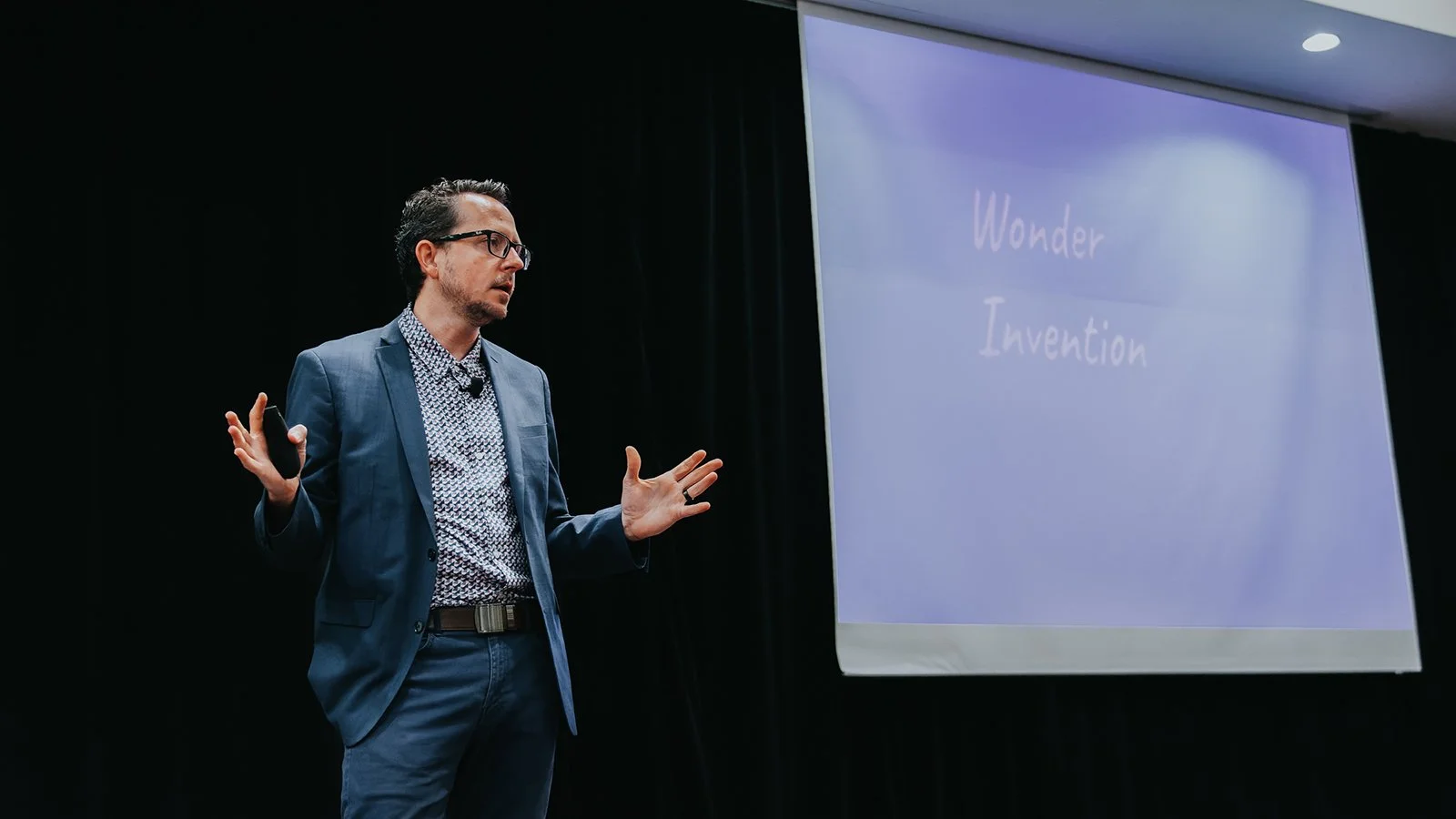
5 Years In: The Tool That Changed How I Lead
This month marks five years since I first discovered a tool that has changed the way I lead.
It's called The Six Types of Working Genius, or just Working Genius, for short.
May is for Monthly Giving: 3 Lessons from the First U.S. Sustainer Program
May is truly for Monthly Giving.
Want to know why else May should be a time to recognize, celebrate, and lean into the opportunities surrounding sustainable giving?
Because May 24, 1815 was the foundation of the first one-to-one-style sponsorship recurring giving in U.S. history.
In many ways, May 24 is the birthday of recurring giving in the United States. 🥳🎂🎉

Introducing the Sustainable Giving Partner Certification
When I first started speaking about the opportunity for charities to grow recurring giving, I focused most of my time on helping nonprofits see that this was a trend for them, not just for someone else.
Today, I’m seeing more and more leaders not only recognize the trend but also believe it could be for them. They want to grow recurring giving. They're ready.
The question has shifted from "should we?" to "how do we?"
And increasingly, the answer to that question depends on the providers they partner with.

From What Sustainable Giving Is – To What It Could Be
In 2000, 67% of households in the U.S. gave a gift to charity.
By 2020, that figure had fallen to 47%, and there is reason to believe it has slid further since then.
The generosity crisis is real.