
The Wave Report is about trends that leaders can learn from, and why I think they matter. This week is about a crisis in the movie business, and what disruption spells for leaders who have eyes to see.
But first, I have a confession to make.
I’ve been watching Amazon’s newest streaming series, The Rings of Power. Based on J.R.R. Tolkien’s Lord of the Rings universe, Amazon has invested $1 BILLION dollars on the show - an astronomical amount by any stretch of the imagination.
Do you remember the days of made-for-TV movies? I grew up in an era when “made for television” meant low-production TV movie specials, bad sequels, and studio-audience sitcoms.
We now live in an era where the biggest cinematic franchises of our day have more small-screen shows streaming than big-budget theatrical blockbusters. For example, this next year, Star Wars has eight made-for-streaming shows coming out, and zero theatrical releases.
Just one episode of a show like The Rings of Power makes most traditional movies look low budget.
But, that’s not my confession.
My confession is that I’m watching Amazon’s glorious, highly cinematic depiction of Middle Earth… on my phone.
I feel bad just admitting that. These guys spent $1 BILLION going to the remotest parts of earth, hiring the best set and costume designers, film crews. Literally invented entire cities.
And I’m watching it unfold on a 6x3 inch screen. I can’t be bothered to even sit on the couch for 60 minutes to get a sense of the glory and grandeur of Middle Earth on our normal-sized television.
But why this long diatribe?
Because theaters are in trouble.
More importantly, the whole entertainment industry is being disrupted. And that’s not only good news, but there is a lesson that nonprofit and business leaders alike can learn from the situation. More on that lesson in a moment.
Disruption on the big screen
Three headlines caught my attention recently...
Regal parent Cineworld files for Chapter 11 bankruptcy (NY Post)
Moviegoing won't return to pre-pandemic levels, says Disney's Bob Iger (CNBC)
MoviePass relaunch: Beta test to start in Chicago, Dallas, Kansas City (CNBC)
Perhaps to no one’s surprise after the past three years, Regal Cinema’s parent company just filed for bankruptcy. They cited a “lack of blockbuster titles” for low ticket sales.
A lack of blockbuster titles? Does anyone else see the irony here? Amazon just premiered a billion-dollar blockbuster. But it’s not going to the big screen. It’s a made-for-streaming cinematic masterpiece that people like me are watching on our phones. (And that’s not even to mention the other major streaming series on HBO Max from George R.R. Martin, House of the Dragon, at a cool $20 million per episode).
Crisis in the movie business is spelled o·p·p·o·r·t·u·n·i·t·y
The reality is, no matter how you look at it, the movie-making business has changed permanently over the past several years. It’s not just the lack of blockbuster movies that has disrupted the movie business. It’s a lot more than that.
The rise of streaming services, the changing habits of video consumption thanks to the likes of YouTube and TikTok, ever-improving home theater technology, and our general lack of patience as a society to go and sit in a theater for 3 hours. Oh, and a global pandemic that completely disrupted what little routine may have been left for moviegoing.
Former Disney CEO Bob Iger is hardly going out on a limb when he says “I don’t think movies ever return, in terms of moviegoing, to the level that they were at pre-pandemic.” In the CNBC piece, he goes on to note that consumers have become more comfortable with streaming services while in lockdown and grew to enjoy the content on these platforms, including the flexibility of being able to choose what to watch and when.
Here’s the good news — whenever there is major disruption in any sector, there is innovation. And where there is innovation, there is opportunity. Opportunity for creating new value for customers and donors. Opportunity for turning a crisis into an opportunity.
If necessity is the mother of invention, then crisis is the mother of innovation.
Crisis is the mother of innovation
I would like to quote the great philosopher Lisa Simpson, and her father, Homer. Upon explaining to her father that the Chinese use the same word for “Crisis” as they do for “Opportunity”, Homer responds:
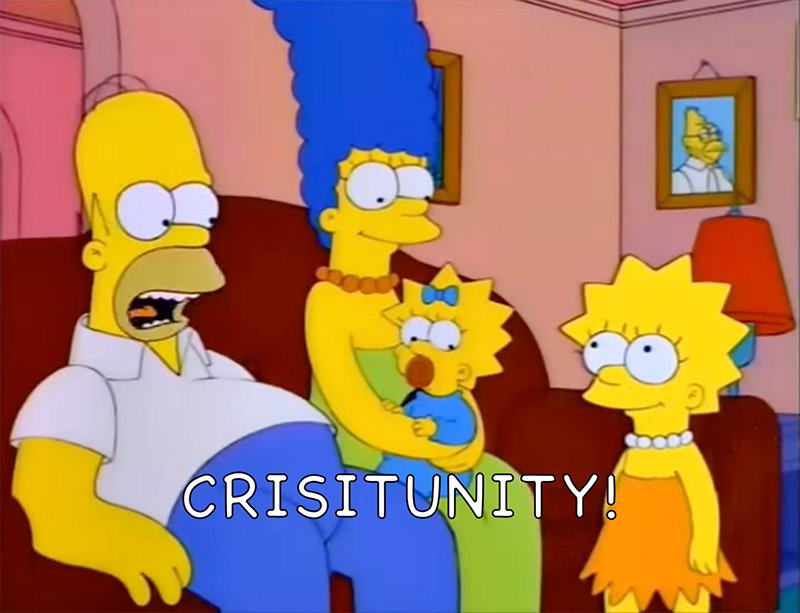
Crisis is fertile ground for innovation. It’s what kicks us out of our comfortable status quo, and motivates us to try different things. To see things differently. That’s what the movie business needs.
The reemergence of MoviePass is just one of many many many innovations that are coming out in light of the current climate. I’m not passing judgement on whether this innovation will last. But one thing is for certain - theaters can’t keep doing the same thing they’ve always done and expecting different results.
I don’t envy those who are working at traditional theater chains. Their job is hard. The world has changed. But all is not lost. They can choose to do nothing, or to try to incrementally improve their situation. Or, they can use this crisis as an opportunity to innovate.
What’s your crisitunity?
What disruption are you facing? What keeps you up at night (or should keep you up at night?).
Then flip it, and as yourself the question - how is this crisis an opportunity for us to innovate?
Surfs up! 🌊
- Dave