
I grew up in Southern California. If Disneyland had a long shadow, I was raised in it.
The only problem was my family couldn’t afford to go to Disneyland most of the time. I remember growing up, going to Anaheim to attend a nearby event. I distinctly remember being excited to stay in a motel across the street – one of several motels I learned later in my adult life were cheap hotbeds for gang activity and homelessness – but to a 10-year-old, it all seemed like a grand adventure (“Mom, they have a slide into the pool!”).
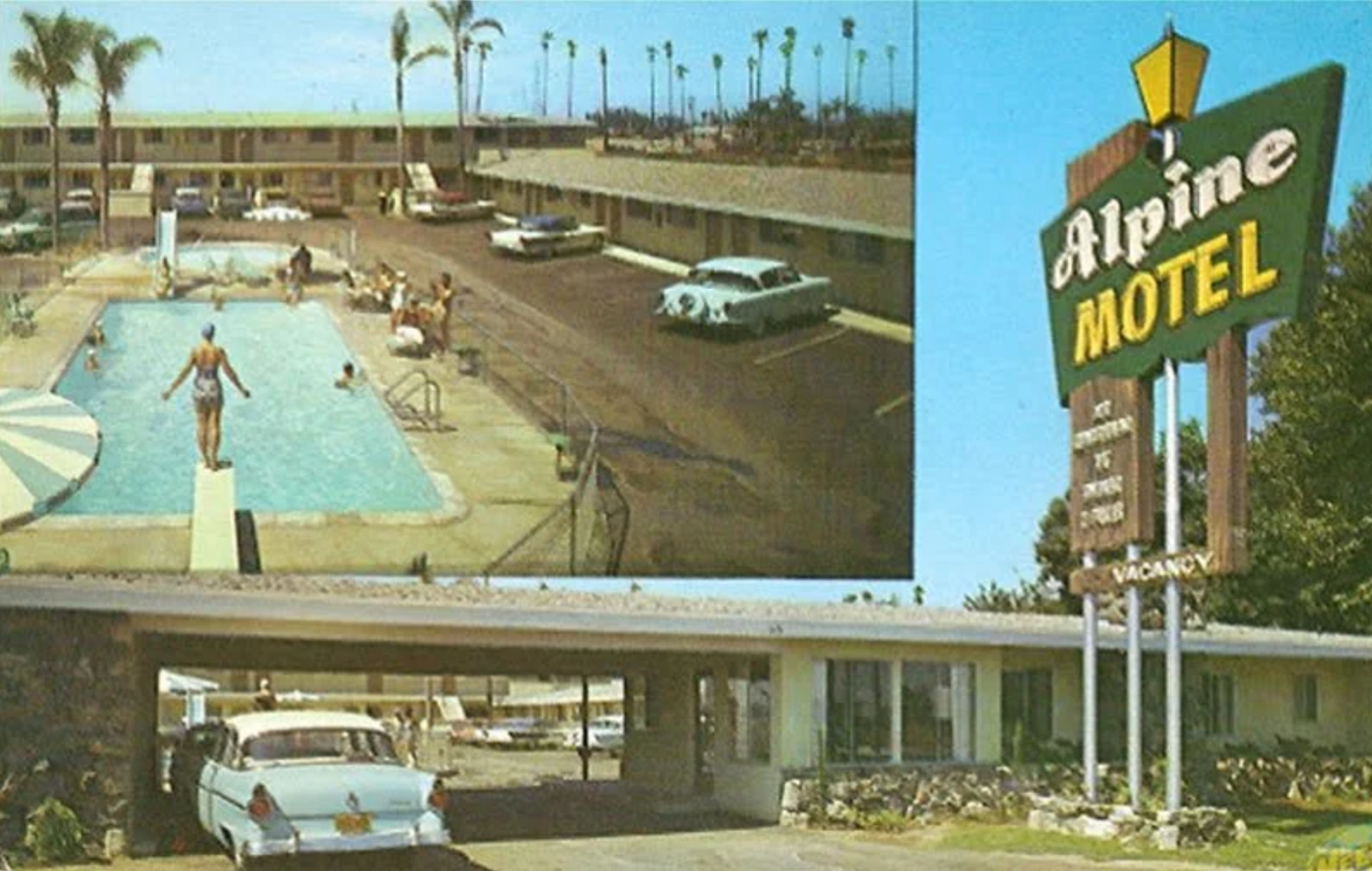
Above: Lodging establishments like the Alpine Motel sprouted up around Disneyland over the years. While novel and exciting in their heyday, by 1998, they had become quite rundown.
My only disappointment was being relegated to peering over the walls at the Happiest Place on Earth. Still, it was pretty heady stuff to be so near to the magic.
In 1998, I remember seeing many of these motels start to be torn down and construction fences going up around the Disneyland parking lot. All this construction was to make way for an entirely new theme park that would become known as Disney’s California Adventure. It was exciting times.
Disney - the magic touch?
Disney is best known for creating magic – remarkable experiences for the entire family. With 40+ years of experience building and operating theme parks, it was widely believed that Disney would create magic once again. Once you have experience and expertise gained over many years and lessons learned, shouldn’t “creating magic” come easily?
The new park cost $600 million to build.
$600 million. I don’t know about you, but $600 million seems like a lot of money. More than half a billion dollars!? And that’s just the publicly quoted number - I’ve heard it was as much as $750 million.
Whatever the sum, it enabled Disney to turn an asphalt parking lot and some old motels into a theme park, with the intention of turning the Disneyland Resort into a multi-day destination. The goal was to create a place that people would travel to from around the world to spend a couple of days instead of a day stop before moving on to one of the many other attractions in Southern California.
The park opened on February 8, 2001, and Disney braced for huge crowds. The park’s opening daily capacity was 33,000 people, and there were worries it would not be enough on some days. Park officials told the Los Angeles Times that “there will be days when California Adventure will have to turn patrons away.”
Not so magical
Disney was in for a rude shock. A series of preview openings held in January 2001 led to negative reviews, and after the park officially opened to the public, to say that Disney missed expectations is an understatement. In the first year of operation, attendance averaged 5,000 to 9,000 on weekdays and 10,000 to 15,000 on weekends, well short of the 33,000 capacity.
Worse still, reportedly only 20% of visitors to the park in its first year said they were satisfied with the experience. By the fall of that year, both Wolfgang Puck and Robert Mondavi had already closed high-profile restaurants in the park. Ouch.
In the first year of operation, California Adventure recorded 5 million visitors, a far cry from the 12.3 million visitors that Disneyland saw during the same period.
What went wrong?
With any initiative as big and complex as this, there is never one reason something doesn’t work. But whatever the reason, it was clear that Disney fell short of its standard for creating magic. The results were unmistakable – lackluster performance.
One contributing factor that is clear is budget and time. While $600 million is a lot of money, and two years seems reasonable for construction, I’ve talked to sources who were at Disney then, and they all agree the budget was very low.
The president of Disneyland at the time, Paul Pressler, had come out of the world of consumer products and merchandising. He infamously was quoted as saying that the theme parks existed to sell merchandise. While it’s unclear whether he truly said that, his decisions reflected a focus on commercializing every square inch while having a reputation for aggressive cost-cutting.
What resulted was an OKAY theme park. $600 million in, and 4 out of 5 customers saying that they weren’t satisfied with the experience. Again, ouch.
Missing the magic
It turns out that attaining magic takes huge amounts of time and effort. Even Disney, arguably the most adept company in the world at creating magic, couldn’t achieve magic out of the gate on this project.
They got the experience to 90%, which is pretty good. But 90% isn’t magic.
So what did they do about it?
Creating magic takes time and effort
In 2007, Disney announced a major renovation to California Adventure. Then Disney CEO Bob Iger said, “Any time you do something mediocre with your brand, that’s withdrawal. California Adventure was a brand withdrawal.” He intended to fix this “mediocre” park.
Under Iger’s direction, over the next five years, the company invested $1.1 BILLION to renovate the park, including rebuilding what was effectively the park’s Main Street area, a revamped land known as Paradise Pier, and the pièce de résistance, a brand new immersive land known as Carsland.
$1.1 billion. Recall that the initial cost to build the entire park from the ground up was $600 million. In other words, the remodel cost almost double the initial cost of opening the park. Can you imagine remodeling your home and six years later starting a remodel that would cost twice what you paid for it?
2012 saw the completion of the redesign and park expansion after five years.
But did it work? Did this massive investment in the search of creating magic pay off?
The day of the park’s rededication drew a record number of 43,000 visitors. Two days later, the park hit a new record of 45,000 visitors. (Wikipedia)
California Adventure saw 9 million visitors in 2022, down only slightly from a pre-pandemic high of 9.9 million in 2019.
That’s what I call magic.
How this applies to leaders of nonprofits and businesses
I don’t know about you, but the realm of hundreds of millions and billions of dollars of investment is outside my day-to-day reality. That being said, I think there are four key lessons that leaders can take away from Disney’s experience of turning a mediocre new initiative and turning it into a success by achieving elusive magic.
Magic starts when you think you are finished
Magic takes care, effort, and dedication
Magic takes time
Magic pays off
Let’s unpack each briefly.
Magic starts when you think you are finished
If you want to achieve magic, the real work begins when you think you are finished. Finished may be “good enough,” but it’s hardly enough to differentiate you. Some may have considered California Adventure completed in 2001, but it was just the starting line. Achieving magic and creating a remarkable experience requires going above and beyond.
Note – this does not mean that I necessarily think California Adventure should have delayed opening for several years to “get it right.” Sometimes economically, you can’t afford magic right out of the gate. While it did hurt Disney’s reputation initially, they were able to cashflow some of the improvements to get to magic by being open for several years while the company got to a place it could make that $1.1 billion investment.
💡 Takeaway: Achieving a remarkable experience always involves going above and beyond what anyone expects. When you think you are finished or good enough, it’s probably time you are just getting started.
Magic takes care, effort, and dedication
We’ve already established that magic requires going above and beyond. But a corollary to that is the effort and dedication it takes to stand out and create remarkable experiences that lead to remarkable results.
I don’t know if this is entirely true, but I believe that passionate care for the customer and care for the experience goes a long way. When a leader cares deeply about creating remarkable products and experiences, that tends to provide the fuel needed to put in the extra effort and dedication it takes to achieve magic.
I hate to say it, but this extra care, effort, and dedication becomes a competitive advantage because it is so rare. It causes organizations and leaders to stand out and can be incredibly differentiating.
💡 Takeaway: When leaders care deeply about the end user, the product, or the experience, that care provides the fuel to put in the effort and dedication required to stand out among the competition and create remarkable experiences that lead to remarkable results.
Magic takes time
Disney initially decided they needed a second theme park in 1995 after a major West Coast expansion known as WestCOT (meant to be a West Coast version of EPCOT) was canceled. California Adventure opened in 2001, six years later. But as you have seen, it didn’t achieve that elusive level of magic until 2012. That’s 11 years into operation and 17 years from conception. You’ve heard of the 10-year “overnight success” stories – companies or products that seemingly explode onto the scene after existing for many years. California Adventure followed a similar trajectory, not hitting its stride for over a decade.
It takes time to hone and get it right, to work out the kinks, and to achieve quality. This goes for many areas of life beyond theme parks.
💡 Takeaway: Time is a leader’s greatest enemy or friend, depending on how they use it. Greatness takes time, so if you put in the effort and dedication and manage expectations, time can become an ally.
Magic pays off
No doubt some of you have read this article thinking, “what a waste of money” – was it really worth it to dump $1.1 billion into taking the product from good to magical? Did it really pay off?
There is a concept in business that some refer to as “winner take most.” Others refer to it as “the long tail.” No matter what you call it, it’s the idea that the top 1% of any industry or market gets the vast majority of the rewards. In other words, the difference between #1 and #5 in the market is worth many magnitudes more than the difference between #5 and #10.
Put simply, achieving magic is hugely lucrative.
In Disney, investments like those in California Adventure have led to Disney Parks and Experiences driving fully one-third of the Walt Disney Company revenues. In one quarter alone, Q4 2022, that amounted to $7.2 billion in revenue, compared to the company’s total revenue of $23.5 billion (Disney earnings report).
💡 Takeaway: Achieving magic is hard work, but it pays off when your organization becomes the go-to in your space because the top few players in any market bring in most of the rewards.
Until next week… Surfs Up! 🌊
- Dave